The method
Strength is only as good as its control.
In sport it is not the strongest muscle that wins, but the nervous system: how fast do you read a situation, how early do you react, how cleanly do you decelerate? Classic strength training barely trains these abilities.
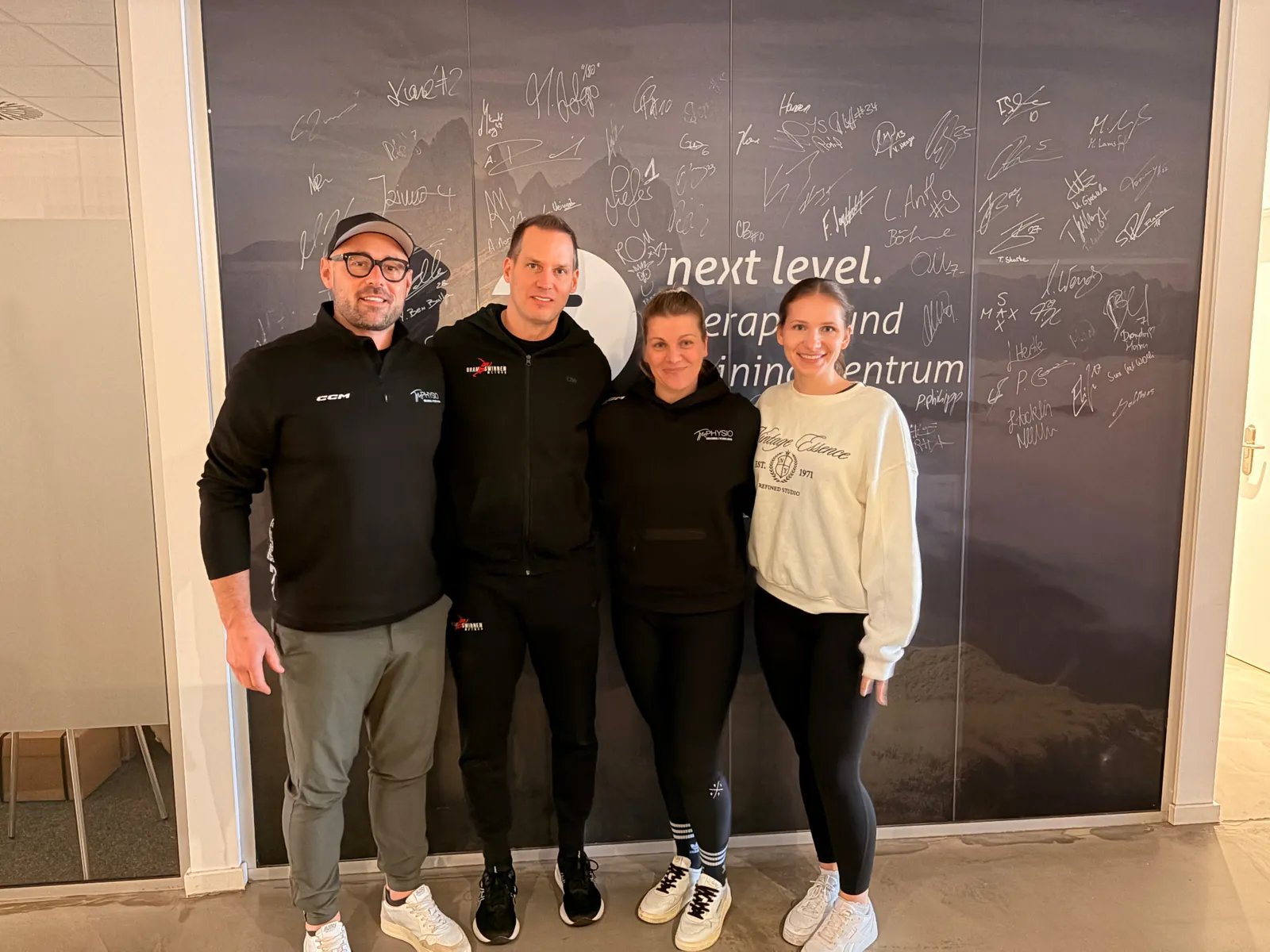
Our training content is based on the methodology of Bram Swinnen (Integrated Performance Training, Belgium). The physiotherapist and sports scientist with two master's degrees is the author of the bestseller "Strength Training for Soccer" and has worked with professional teams, Olympic medallists and world champions for over 25 years.
- Strength, speed and cognition in one exercise
- Measurably steered by velocity instead of gut feeling
- One methodology from rehab to peak performance
Training content
8 building blocks for neuromotor performance
Depending on your goal, sport and rehab phase, we combine the building blocks into your individual programme.
Sport- & rehab-specific brain training
Perception, decision-making and reaction under time pressure – integrated directly into movement on the Skillcourt and with dual-task drills.
Neurocognition in ACL rehab & prevention
After an ACL injury the brain controls movement differently. We train landing, cutting and change of direction with an added cognitive task – just like in a real game.
Eccentric training & deceleration
Deceleration is the phase with the highest injury risk. Eccentric strength and clean braking mechanics make you faster and more robust.
Microdosing & neural priming
Short, high-quality stimuli instead of long sessions: maintain performance and activate the nervous system before competition – without unnecessary fatigue.
Velocity-based training
We measure how fast you move loads and steer training via velocity – for neuromuscular efficiency rather than pure maximal strength.
Horizontal force & sprint
Acceleration happens forwards. Targeted exercise selection for horizontal force production, first step and sprint mechanics.
Plyometrics, ballistics & rate of force development
Jumps, throws and reactive drills to develop force in the shortest time – built up progressively from rehab to full performance.
Return to sport: agility & change of direction
Criteria-based return: movement quality, reactivity and sport-specific demands are tested before you go back on the pitch.
Who it is for
One approach. Three goals.
Faster. More reactive. More robust.
Improve first step, sprint, change of direction and decision speed – and prevent injuries through better braking mechanics.
Back on the pitch.
After ACL surgery, ankle or muscle injury: neurocognitively structured rehab with criteria-based testing up to full load.
Power for life.
Power, balance and reaction decline most with age. Strength and dual-task training preserve independence and help prevent falls.
Process
Test. Plan. Perform.
Screening
Reaction and agility tests on the Skillcourt, jump and strength tests, movement analysis.
Profile
We create your neuromotor profile: where are your strengths, where are the gaps between strength, speed and control?
Training
Supervised sessions with the right building blocks, periodised by season or rehab phase, plus microdosing for home.
Re-test
Regular re-tests make progress visible and show when you are ready for the next step.
Screening takes place in our Skillcourt & Performance Lab. More on returning after injury: Athlete care & return to sport.
Additionally
Further training services
EMG biofeedback
Make muscle activity visible in real time with myoact – as a measurement or during training.
MorePelvic floor training
Check-up and courses for postnatal recovery, incontinence and sport.
MoreMedical equipment training
Certified KGG on prescription, billed with all insurers.
MoreGolf Medical Training
Golf-specific training for performance and prevention.
MoreFAQ
Frequently asked questions
What is neuromotor performance training?
Neuromotor training trains the connection between brain, nervous system and muscles: how quickly you perceive, decide and react – and how fast and controlled you produce and absorb force. It combines strength, speed and cognitive tasks instead of training them separately.
What does "training content according to Bram Swinnen" mean?
Bram Swinnen (Integrated Performance Training, Belgium) is a physiotherapist and kinesiologist, author of "Strength Training for Soccer" and has worked in elite sport for over 25 years. We build our training content on his methodology: sport- and rehab-specific brain training, neurocognition in ACL rehab, eccentric and deceleration training, microdosing and neural priming, velocity-based training and plyometrics.
Who is this training for?
Athletes who want to get faster, more reactive and more robust; patients in return-to-sport, e.g. after ACL surgery; and active older adults who want to maintain power, balance and reaction speed.
Is neuromotor training useful after an ACL injury?
Yes, as part of a structured rehab. After an ACL injury, the brain relies more heavily on visual control of movement. Neurocognitive tasks during cutting, landing and change of direction prepare you for the real demands of your sport. The timing is always agreed with your treating doctor.
Do I need a prescription?
No. Neuromotor performance training is a self-pay service. Medical equipment training (KGG) is also available on prescription.
How often should I train?
Usually 1–2 supervised sessions per week, complemented by short microdosing units you can do at home or before your team training. We adapt the plan to your season or rehab phase.
Ready for the next level?
Start with a screening on the Mühleninsel Landshut. We show you where your performance reserves are.